Case Manager: Haward Cho
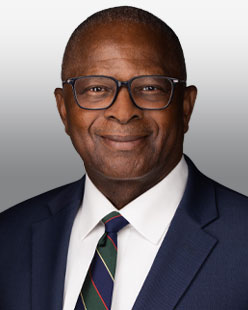
Hon. Tony L. Richardson (Ret.) brings more than four decades of legal experience to his work as a neutral, including nearly three decades in private practice handling complex commercial litigation and more than thirteen years on the Los Angeles County Superior Court. His career has placed him on both sides of the bench in sophisticated civil disputes. He has experience as a trial attorney and partner at several prominent national law firms, as a trial court judge managing an independent civil calendar, and for seven years as a member of the Superior Court’s Appellate Division. In 2020, he also served by assignment as a Justice Pro Tem of the California Court of Appeal, Second Appellate District, Division Seven. During his judicial career, he authored thousands of appellate opinions and decisions, including several published opinions.
Before his appointment to the bench, Judge Richardson developed a broad complex litigation practice representing clients in state and federal courts. His formative years were spent at Kirkland & Ellis LLP, where he rose from associate to partner during a 17-year tenure and tried insurance coverage, contract, and product liability matters. His practice also encompassed mass tort, antitrust, unfair business practices, intellectual property, and other complex business disputes. He later served as a partner at Reed Smith LLP and SNR Denton US LLP before being appointed to the Los Angeles County Superior Court in 2012.
Judge Richardson’s substantive experience extends well beyond traditional commercial disputes. Over the course of his practice and judicial career, he has handled matters involving insurance coverage, employment discrimination and wrongful discharge, Labor Code and PAGA claims, consumer disputes, personal injury, restrictive covenants, real property, breach of contract, residential and commercial unlawful detainer, habitability, lemon law, child abuse, mass torts, construction defects, professional malpractice, intellectual property, police misconduct, and partnership disputes. His years deciding appeals and teaching appellate practice also give him substantial experience evaluating procedural and appellate issues, including matters potentially subject to arbitration.
His judicial career has been similarly varied. Judge Richardson has served in juvenile dependency, criminal, small claims, appellate, and independent calendar assignments, requiring him to master materially different bodies of substantive and procedural law and to work with litigants from widely differing backgrounds. From 2017 through 2024, he served in the Los Angeles Superior Court Appellate Division, and he has taught judges and research attorneys throughout California on appellate practice and procedure as a faculty member of the Center for Judicial Education and Research. From 2024 to 2026, he presided over an Independent Calendar Court at the Stanley Mosk Courthouse, handling civil matters from filing through disposition.
Resolution has been a consistent theme throughout Judge Richardson’s career. Even as a trial lawyer, he sought to resolve disputes without unnecessarily consuming his clients’ time and resources, while remaining prepared to try matters which could not appropriately be settled. On the bench, he found mandatory settlement conferences among his most rewarding assignments and reports the settlement conferences he conducted resulted in resolution. His philosophy is grounded in the view relatively few cases ultimately need to be tried and meaningful early intervention can create opportunities for resolution before litigation costs and positions become entrenched.
Judge Richardson approaches mediation with preparation, persistence, and pragmatism. Before the session, he works to become thoroughly conversant with both the factual record and governing law while identifying the concerns and objectives driving the parties themselves. At impasse, he searches for common ground and then dissects the facts and circumstances to identify a realistic framework for resolution. When a matter does not resolve during the initial session, he believes the mediator’s work should continue. Therefore, he remains engaged, available, and persistent.
His perspective is also informed by a broad professional and personal trajectory. Judge Richardson grew up in a large family of limited means before attending Harvard College and Stanford Law School, becoming a trial lawyer at nationally prominent firms, and ultimately joining the bench. He credits that path with helping him to understand the interests and personalities of litigants ranging from individuals and small-business owners to representatives of Fortune 500 companies. Attorneys who have worked with or appeared before him, he believes, would describe his approach as fair, impartial, level-headed, pragmatic, grounded, and committed to ensuring each party is genuinely heard.
Judge Richardson also brings substantial experience assessing complex disputes at the appellate level. That background allows him to examine not only the immediate strengths and weaknesses of a party’s position, but also the procedural, evidentiary, and legal issues which may affect a case as it progresses through litigation and potential appellate review. Combined with decades of trial and litigation experience, this perspective makes him particularly well suited to serve as a neutral for sophisticated commercial matters, contract disputes, cases presenting difficult legal questions, and disputes in which the parties would benefit from a neutral capable of taking a deep dive into both the record and the law.
Sophisticated commercial litigation experience. Before taking the bench, Judge Richardson spent nearly three decades in private practice, including lengthy service as an associate and partner at Kirkland & Ellis and subsequent partnerships at Reed Smith and SNR Denton. He litigated complex business disputes in both state and federal court and personally tried insurance coverage, contract, and product liability cases.
Trial and appellate perspective. His experience encompasses private practice, trial court assignments, seven years in the Los Angeles Superior Court Appellate Division, and temporary service on the California Court of Appeal. This gives him an unusually broad vantage point from which to evaluate legal arguments, litigation risk, procedural issues, and the practical consequences of continuing a dispute.
Deep preparation. Judge Richardson identifies preparation and a willingness to take a “deep dive” into the issues as his core strengths. He understands the factual record, applicable law, and the interests motivating the parties before attempting to move them toward resolution.
Persistence. He does not view the end of a mediation session as necessarily the end of the process. If a dispute remains capable of resolution, his approach is to remain engaged and available and continue working with the parties.
Ability to work across constituencies. His career has involved sophisticated corporate clients, small businesses, individual litigants, public-interest organizations, children and families, and people confronting significant economic or personal hardship. That breadth informs an approach centered on understanding what is actually driving each participant’s position.
Complex legal analysis. Judge Richardson’s appellate experience and judicial teaching are significant differentiators for cases involving difficult questions of law, procedural complexity, dispositive issues, or meaningful appellate exposure. He served as CJER faculty on Appellate Division best practices from 2019 through 2024 and has taught appellate judges, research attorneys, and Los Angeles Superior Court judges.
Judge Richardson approaches mediation from the premise most disputes are capable of resolution and effective intervention can prevent parties from incurring unnecessary litigation costs and prolonging conflict.
Preparation is central to his process. Before mediation, he studies the facts and applicable law and seeks to understand the parties’ underlying concerns and objectives—not simply their stated litigation positions. During the mediation, he listens carefully to each side, identifies areas of common ground, and works through the factual and legal issues to develop a realistic framework for settlement.
His style is persistent, pragmatic, and grounded. He believes parties are more receptive to difficult conversations about litigation risk when they know their positions have first been fully understood. At impasse, he returns to common ground, reassesses the facts and circumstances with the parties, and searches for avenues which may not have been apparent at the outset.
If the case does not resolve during the session but settlement remains achievable, Judge Richardson remains engaged and available after the mediation.
Judge Richardson views arbitration as closely analogous to a bench trial: the neutral must be thoroughly prepared, impartial, attentive to the evidentiary and legal record, and committed to ensuring each party receives a meaningful opportunity to be heard.
His anticipated approach to arbitration draws directly upon his extensive judicial experience. He has presided over trial-court proceedings, resolved complex procedural and substantive questions, spent seven years deciding matters in the Superior Court Appellate Division, and served temporarily on the California Court of Appeal. His stated approach is to bring the same thoughtful and impartial decision-making process to arbitration that he applied on the bench.
In private practice, Judge Richardson was one of the lead attorneys on a Kirkland & Ellis team working with a coalition of public-interest organizations representing patients of Rancho Los Amigos Rehabilitation Center in litigation challenging the planned closure of the facility. The team obtained injunctive relief preventing the closure. The work contributed to recognition including the State Bar President’s Large Law Firm Pro Bono Service Award and a disability-rights organization’s Volunteer Lawyers of the Year honor.
On the bench, Judge Richardson presided over a heavily litigated dispute involving participants in the emerging digital sports entertainment and gaming industry. The case concerned the enforceability and application of a contractual non-compete provision under California law, involved nuanced legal issues and multiple interlocutory rulings, and proceeded against the backdrop of a federal court ruling reaching a different conclusion on an issue. After litigation of key issues, the parties resolved the matter.
Los Angeles County Superior Court, Judge, 2012–2026
Prior Legal Experience
What types of cases does Judge Tony Richardson handle as a mediator?
Judge Richardson is particularly well suited for complex civil and commercial disputes, including breach of contract, insurance coverage, employment, PAGA and Labor Code matters, consumer claims, intellectual property, partnership disputes, construction defects, professional malpractice, real property, personal injury, product liability, mass tort, and unfair business practices. His experience also encompasses restrictive covenant and non-competition disputes, landlord-tenant matters, habitability, lemon law, and police misconduct claims.
What is Judge Richardson’s mediation style?
Judge Richardson describes his approach as preparation-intensive, persistent, and focused on resolution. He works to understand both the legal and factual issues and the interests motivating the parties, then uses that foundation to identify common ground and realistically assess potential paths to settlement. His judicial style has emphasized fairness, impartiality, pragmatism, and ensuring each party has been heard.
Does Judge Richardson have complex commercial litigation experience?
Yes. Before his appointment to the bench, Judge Richardson spent nearly three decades in private practice and was a commercial litigation partner at Kirkland & Ellis, Reed Smith, and SNR Denton. He tried insurance coverage, contract, and product liability matters and litigated antitrust, mass tort, unfair business practices, intellectual property, and other complex business disputes in state and federal courts.
Does Judge Richardson have experience with contract disputes?
Yes. Contract disputes are a particular area of strength for Judge Richardson. He tried contract matters in private practice, has handled contract issues throughout his litigation and judicial career, and specifically identifies himself as particularly adept at handling contract disputes.
How does Judge Richardson’s appellate experience benefit parties in mediation?
Judge Richardson spent seven years in the Los Angeles Superior Court Appellate Division and served temporarily as a Justice Pro Tem on the California Court of Appeal. He has also taught appellate practice to judges and research attorneys throughout California. That experience gives him substantial familiarity with appellate procedure and the legal and procedural issues which can affect a dispute beyond the trial-court stage.
How does Judge Richardson prepare for mediation?
Judge Richardson reviews the facts and governing legal issues in depth and seeks to understand each party’s concerns and objectives before the mediation begins. Preparation and a willingness to take a deep dive into difficult issues are among the qualities he identifies as central to his practice.
How does Judge Richardson approach an impasse?
He begins by identifying areas of common ground and then carefully dissects the facts and circumstances to determine whether those points can provide a framework for resolution. His approach is persistent rather than transactional. If the matter does not resolve during the initial mediation but settlement remains possible, he stays engaged and available.
Does Judge Richardson follow up after mediation?
Yes. Judge Richardson believes a mediator should remain engaged when a case does not resolve initially but continued settlement efforts may be productive. His stated post-mediation approach is to remain available and persistent rather than treating the conclusion of the session as the end of the process.
Does Judge Richardson have settlement experience from the bench?
Yes. Judge Richardson conducted mandatory settlement conferences as a judicial officer and identifies that work as among the most gratifying aspects of his judicial career. Many of the mandatory settlement conferences he conducted resulted in settlements.
Does Judge Richardson serve as an arbitrator?
Yes. Judge Richardson’s arbitration approach draws on his extensive experience deciding matters as a trial and appellate judge. He views arbitration as analogous to a bench trial, with careful preparation, impartial decision-making, and a meaningful opportunity for both sides to be heard as essential components of the process.
Why might attorneys select Judge Richardson for a complex dispute?
His background combines sophisticated commercial litigation, trial experience, more than a decade on the bench, extensive appellate experience, and a demonstrated commitment to dispute resolution. That combination is particularly relevant for matters involving complicated factual records, significant legal or procedural questions, contract interpretation, or parties who would benefit from a neutral willing to engage deeply with both the law and the practical interests underlying the dispute.
